First I thought life is a scarifies because when I was a baby my mother used to wake-up every two hours to my crying.
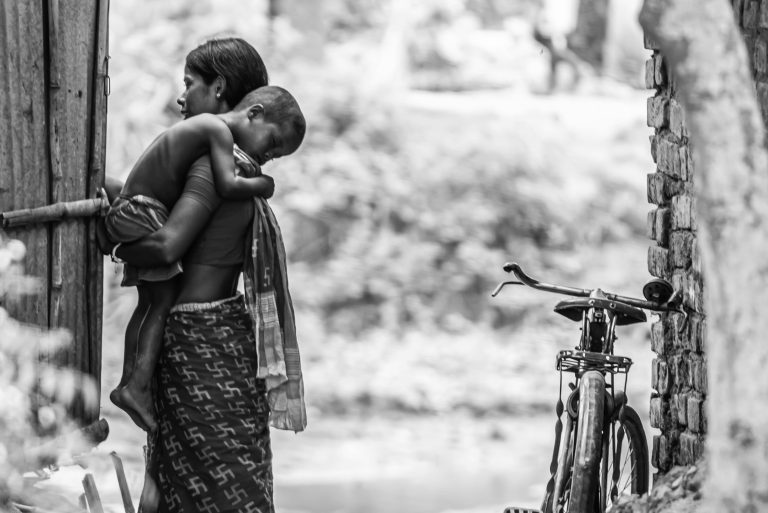
You may know how babies are- they drink, sleep and get-up after poop.
She cleaned me without hesitation.
Fed me when I couldn’t ask and sang to me in the middle of the night when I didn’t even understand her love.
I slept peacefully, she stayed awake exhausted just to make sure I was okay.

When I was a teenager, my father made his own sacrifices.
He said “You just focus on your studies—I will take care of the rest.”.
He carried the weight of every expense, every responsibility.
While I worried about exams, he worried about everything else, quietly putting my future before his comfort.
Now, in my 30s, I see myself doing the same in a different way.

I’ve taken a huge loan to rebuild our family home but when I was rebuilding it, I never thought of it as a sacrifice instead I felt proud.
I felt a sense of purpose.
Yes, there was pressure.
Yes, there were responsibilities.
But it didn’t feel like a burden I was forced to carry—it felt like something meaningful I chose to do for the people I love. And that makes me think maybe the purest form of sacrifice doesn’t even feel like sacrifice at all.

The way we understand sacrifice can change everything
There are two very different ways people see it.
The first is as a transaction.
In this view, sacrifice becomes something like a deal.
It sounds like: “I did this for you, so now you owe me.”
A mother’s sleepless nights, a father’s hard work or even our own efforts later in life everything is counted, remembered and brought back as proof.
Love slowly turns into a kind of ledger:
-
- I gave you this
-
- So you must give me that
And when expectations are not met, it leads to guilt, pressure and even resentment.
The sacrifice is no longer just an act of care it becomes a way to control decisions, to demand obedience or to define what is “right” and “wrong.”
In this perspective, sacrifice loses its warmth.
It stops being a gift and starts feeling like a debt that can never truly be repaid.

But now, I’m starting to notice something different in many situations.
A mother tells her daughter, “After everything I’ve done for you, this is how you treat me?”
A father tells his son, “I paid for your education, I sacrificed my life—now it’s your turn to pay me back.”
Slowly, the language of love changes into the language of repayment.
And this is where something feels wrong to me.
Because if sacrifice was truly an act of love in that moment, why does it return later as a demand?
I was curious about how animals deal such situation for example a mother lion.
She feeds her babies, protects them, stays alert through danger and gives her energy to keep them alive.
She doesn’t sleep peacefully. She doesn’t think about herself first.
But does she ever expect her babies to “pay her back”?
Does she say, “I raised you, so now you must obey me forever”?
No.
She gives what she gives because it is natural. Because it is love in its purest form—without calculation, without expectation, without keeping score.
And when the time comes, she lets them go.
There is no guilt. No pressure. No emotional debt.
That makes me wonder somewhere along the way, have we as humans complicated something that was once simple?
We turned love into a transaction.
We turned sacrifice into a contract.
But maybe at its core it was never meant to be that way.
What do you think ? Please email your answer to healthcoachjobi@gmail.com